
June 1, 2026
Many Teachers, Many Paths, One Experience
Mark Lorello reflects on martial arts, spiritual teachers, discernment and the role of lived experience in continuing to learn.
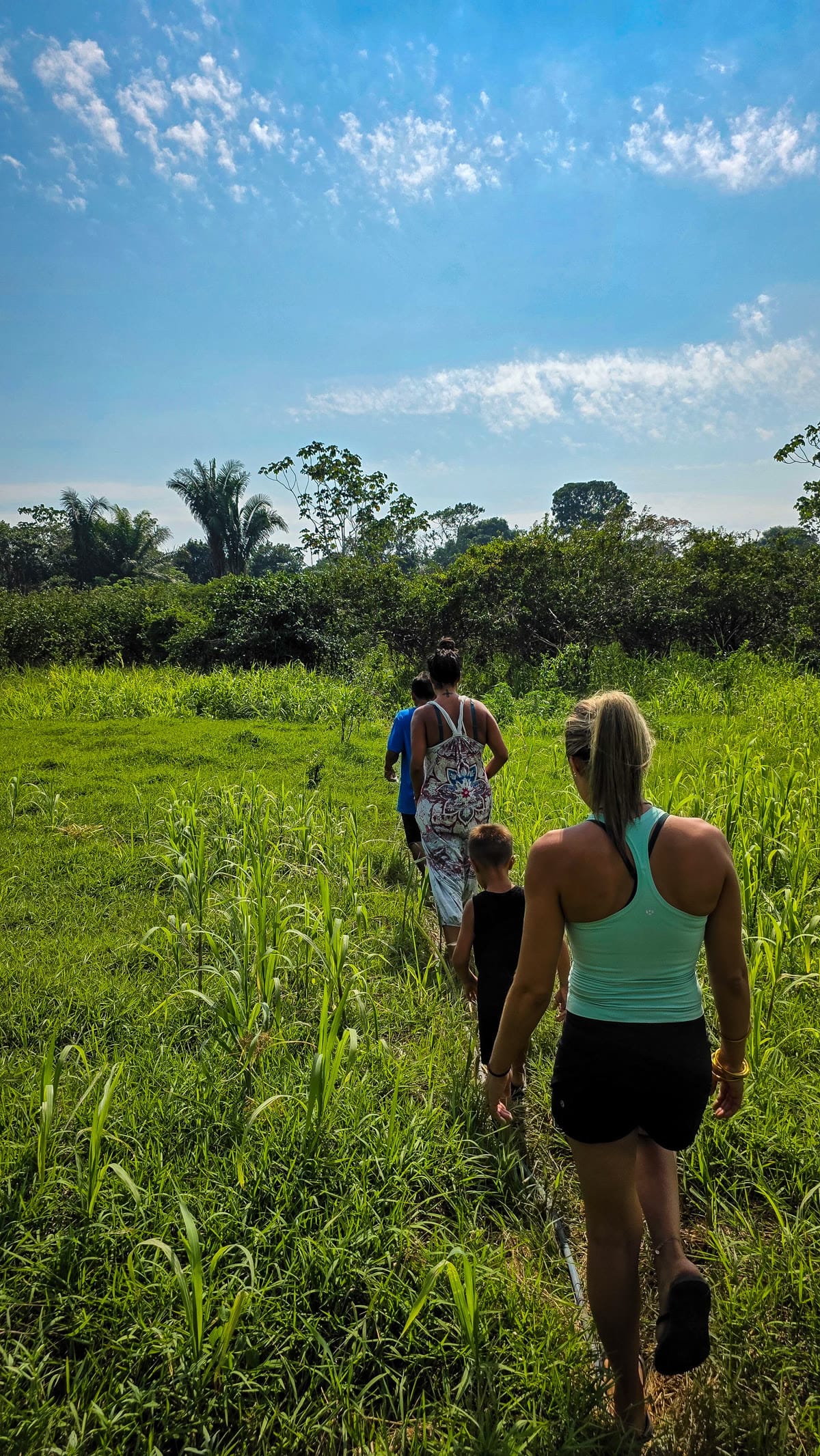
This is my personal reflection on learning across traditions. Respect for different approaches belongs alongside clear boundaries, accountability and practical questions about a facilitator’s training.
By Mark Lorello | AyaWaken
One of the most important lessons I have learned throughout my life is that there are many teachers, many paths, and many ways of arriving at wisdom.
Today there are teachers of almost everything: spirituality, plant medicine, meditation, healing, martial arts and business. Each has their own method and their own language.
Each also has their own way of passing on what they’ve learned.
Too often, people become caught in the idea that there is only one right way.
My experience has shown me something different.
A different approach does not automatically mean a wrong approach.
Many Roads to the Same Destination
Imagine learning a trade.
You may have one instructor show you how to complete a task in a certain way. Later, another instructor may teach the exact same task using a completely different method.
Neither teacher is necessarily wrong.
Both may achieve the same result.
Take something as simple as cutting hair. One barber may teach a specific technique for creating a fade. Another barber may create the exact same fade using a different sequence, different tools, or a different philosophy.
The outcome is often the same.
The path to get there is simply different.
The same principle applies to nearly everything we learn in life.
What Martial Arts Taught Me
I come from a deep background in martial arts, and this lesson became very clear to me through my training.
Over the years, I studied under different coaches and instructors. One boxing coach would teach a punch a certain way. Later, a kickboxing coach would teach the very same punch differently.
At first, this can seem confusing.
Which one is right?
The answer is often that both are right within the framework they are teaching.
Each style has its own concepts, priorities, and objectives.
A boxer may teach a punch designed specifically for boxing. A kickboxer may make subtle adjustments because they must account for kicks, knees, and a different range of combat.
The technique changes.
The principle remains.
As a student, I eventually realized that my job was not to decide who was right and who was wrong. My job was to understand the principles being taught and learn how they fit within my own development.
I learned to take what resonated, test it through experience, and integrate it into my own practice.
Spirituality is no different.
The Spiritual Search
Many people spend years searching for the “perfect teacher.”
What I have discovered is that every teacher carries their own perspective, their own experiences, and their own understanding of life.
Some emphasize discipline.
Some emphasize surrender.
Some emphasize prayer.
Some emphasize meditation.
Some emphasize service.
Some emphasize direct experience.
Some teachers point toward the mountain from the east.
Others point from the west.
Yet they may be pointing toward the very same summit.
The student must learn to remain open while also developing discernment.
Being open does not mean accepting everything blindly.
It means being willing to learn.
Discernment allows us to recognize what resonates deeply and what may not be for us.
Plant Medicine and Different Traditions
This same principle exists within the world of plant medicine.
Over the years, I have sat with and learned from different traditions and lineages.
I have witnessed beautiful work from Taitas.
I have witnessed beautiful work from Shipibo maestros.
I have seen different songs, different prayers, different ceremonial structures, different healing methods, and different philosophies.
Some approaches deeply resonated with me.
Others raised questions within me.
But questioning a method does not automatically mean a teacher lacks wisdom.
Often it simply means they are speaking a different language within the medicine.
Every tribe has its own traditions.
Every lineage has its own teachings.
Every maestro has their own relationship with the plants.
Every healer has their own gifts.
The medicine may be similar, but the way it is approached can be vastly different.
One teacher may focus heavily on songs.
Another on prayer.
Another on silence.
Another on energetic work.
Another on discipline and preparation.
None of these differences automatically make one superior to another.
Often they simply reveal the diversity that exists within these sacred traditions.
Style Is Not the Same as Truth
One mistake people often make is assuming that if a teacher works differently than another teacher, one must be more qualified than the other.
That is not always true.
Often what we are seeing is simply a difference in style.
A boxer and a kickboxer may both be highly skilled fighters while approaching combat differently.
Two carpenters may build the same structure using different methods.
Two maestros may facilitate profound healing while working through entirely different traditions.
Difference alone is not evidence of superiority or inferiority.
It is often evidence of diversity.
The real question is not whether a teacher’s style matches another teacher’s style.
The real question is whether the teaching helps people grow.
The Greatest Teacher
As I have continued walking this path, one thing has become increasingly clear to me.
The greatest teacher is experience itself.
You can read every book.
You can attend every workshop.
You can memorize every concept, every philosophy, every technique, and every teaching.
But true understanding only begins when knowledge becomes lived experience.
A teacher can explain a concept.
A teacher can point toward a truth.
A teacher can offer guidance, wisdom, and perspective.
But eventually each student must walk the path for themselves.
Only through direct experience do we begin to truly understand what the teacher was pointing toward.
This is true in martial arts.
It is true in spirituality.
It is true in plant medicine.
It is true in life itself.
You can hear teachings about surrender, trust, humility, courage, discipline, or love.
But until life presents opportunities to embody those teachings, they remain ideas.
Experience transforms knowledge into wisdom.
What I’ve come to realize is that every teacher is ultimately sharing their own understanding through their own experiences.
Their teachings were not born from theory alone.
They were born from walking a path.
From making mistakes.
From overcoming challenges.
From facing uncertainty.
From learning lessons that could only be learned through living.
This is why experience cannot be measured by certificates.
It cannot be measured solely by age.
It cannot be measured by titles.
Experience is the understanding that comes from sincerely walking a path.
It is the wisdom gained from falling down and getting back up.
From learning what works and what doesn’t.
From recognizing your shortcomings and continuing forward anyway.
Some people accumulate years without accumulating wisdom.
Others walk a path with such sincerity that they gain profound understanding in a relatively short period of time.
The difference is not time.
The difference is presence.
The difference is reflection.
The difference is a willingness to learn from every step of the journey.
A teacher can open a door.
A teacher can illuminate a path.
A teacher can share what they have discovered.
But eventually, each of us must step through that doorway ourselves.
Because at the end of the day, your greatest teacher will always be your own direct experience.
Not because experience makes you right.
But because experience allows truth to become real.
And when truth becomes real through your own lived experience, it no longer belongs to someone else’s teaching.
It becomes your own understanding.
Final Thoughts
The older I get, the more I realize that wisdom is often found in remaining teachable.
There are many teachers in this world.
Many traditions.
Many lineages.
Many languages of the spirit.
Some will resonate deeply with your soul.
Others may simply offer a lesson for a season.
Neither experience is wasted.
Remain open.
Remain curious.
Remain humble.
Remain discerning.
Learn from many.
Respect many.
But never forget that the purpose of a teacher is not to create dependence.
The purpose of a teacher is to help illuminate a path until you can walk it yourself.
At the end of the day, the greatest teachers do not create followers.
They help people discover their own direct relationship with truth.
And that truth is ultimately revealed through experience.
Chonon Peña
May we remain students of life, forever learning, forever growing, and forever walking toward the light.
Learning at AyaWaken
My ongoing learning with Shipibo teachers in Peru informs our prayer-led gatherings near Dallas, Texas. You can meet our teachers, read about Mark and Chloe and explore the questions to ask before choosing a retreat.
To learn about attending, review our preparation guide, integration support and current ceremony dates. Begin with individual intake review; no particular spiritual or personal outcome is guaranteed.